If you are already on a GLP-1, or about to start one, two things tend to end the experiment: the price climbing every time your dose does, and the nausea nobody warned you about. Here is what changes, why it changes, what the alternative costs, and what can be put in the formulation to make the first months easier.
GLP-1 dosing steps up over months. That is how the medication is designed to work. Your body adjusts, the side effects settle, and the dose rises. In most programs, every one of those steps also raises your rate.
The first increase usually lands around month three, and another around month six. Which is precisely when the medication is finally doing what you started it for.
Climb modeled on standard pricing that rises with your dose. Month six is where the climb peaks, and where a lot of people quietly quit. It is rarely the medication's fault.
See the flat price↓$89.97/mo, same at every doseFor weight loss specifically, coverage is the exception rather than the rule. What is left is prior authorization paperwork, an appeal, and often a denial at the end of it anyway.
At the counter without coverage, the brand-name route runs about $1,349 a month.
A cash-pay program removes the entire question. There is nothing to authorize, because there is no claim. No forms, no appeal, no denial letter.
"$89.97 a month" should sound suspicious to you. Here is the actual mechanism, because it is not a discount and it is not a promotion. It is a shorter supply chain.
Every stop adds a margin, a delay, or a form.
Same class of medication. Shorter route. That is the entire reason for the number.
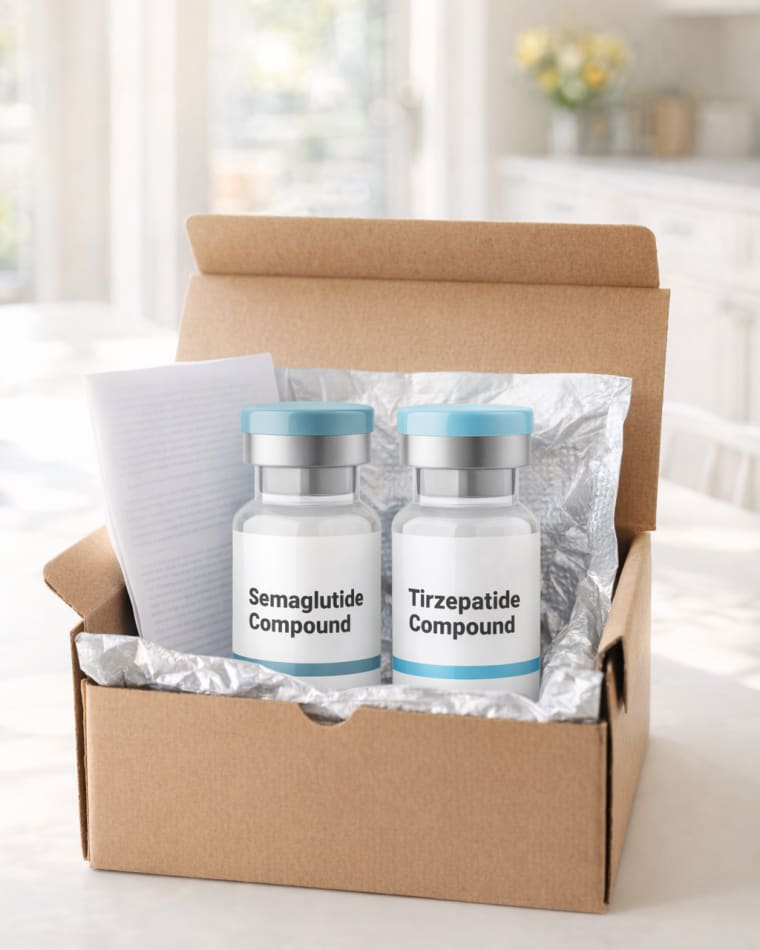
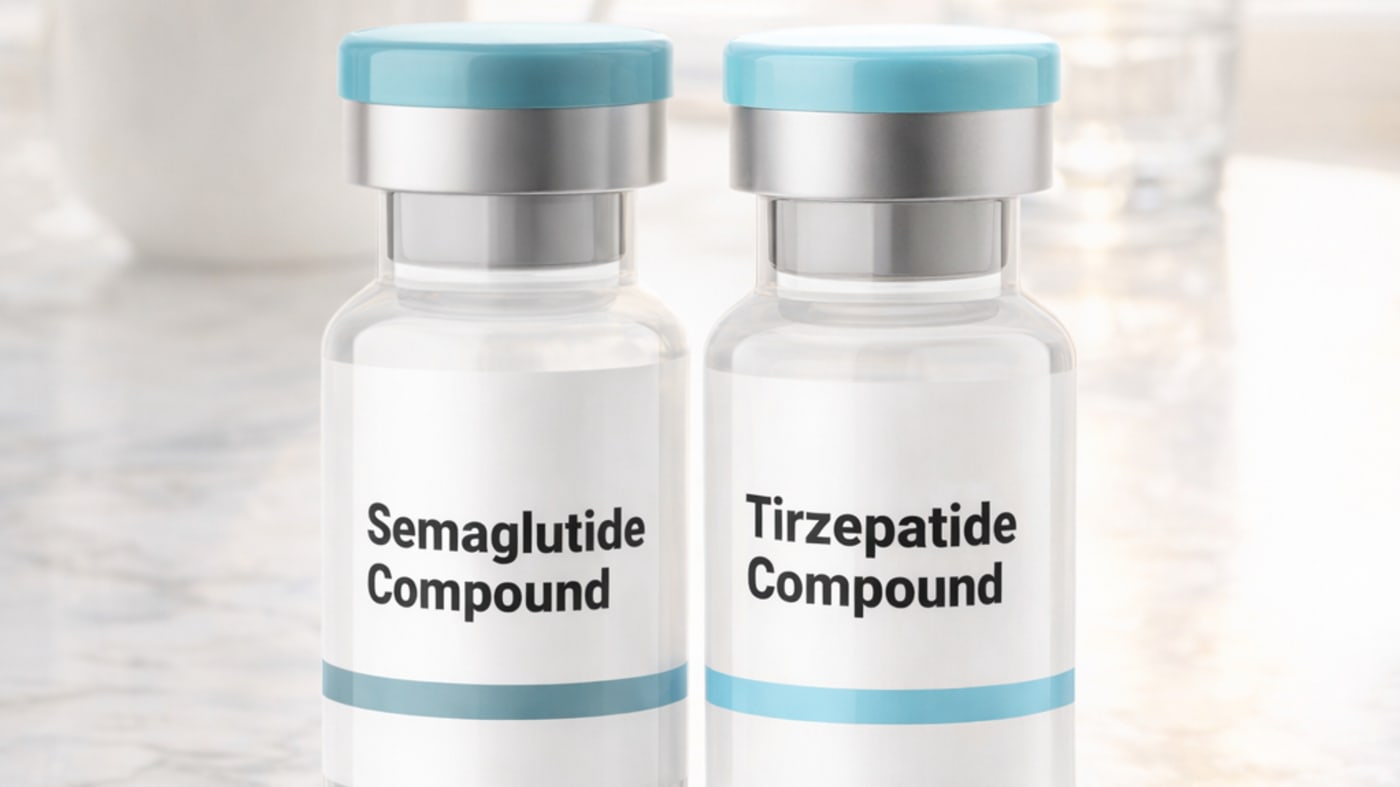
Compounding is not a loophole. It is how pharmacies have made patient-specific medication for as long as there have been pharmacies. Yours is prepared by a licensed, state-inspected US pharmacy, to a prescription written for you by a licensed US provider, following USP standards, and third-party lab tested for purity and potency. RxPros uses the pure base form of the molecule, not the cheaper salt form some sellers substitute.
What you are not paying for is the brand-name pen, the manufacturer's marketing budget, and the four intermediaries standing between it and you.
The one thing to know: compounded medication is not FDA-approved. It is prepared under Section 503A for an individual patient rather than mass-manufactured and reviewed as a finished product. That is precisely why a licensed provider evaluates you before anything is prescribed, and why not everyone qualifies.
So the question worth asking is not whether compounded GLP-1 is legitimate. It is why the same molecule costs ten times more with a different label on it.
GLP-1 medication is famous for what it does to appetite. It is equally famous for nausea. That nausea is the single most common reason people stop in the first eight weeks, and it tends to spike right after each dose increase, the same moment the bill goes up in a dose-priced program. Cost and discomfort arrive together, which is why month six is where so many people give up.
Most programs hand you the molecule and leave the rest to you. RxPros compounds something into the vial alongside it.
B6 is long established as a nausea remedy in other clinical settings. It is the standard first-line option in pregnancy. It is included here for the same reason, at the point in treatment where nausea is most likely.
When appetite drops sharply, nutrient intake drops with it. B12 supports energy and nerve function through exactly that stretch, and deficiency is common in people losing weight quickly.
An amino acid included in the tirzepatide preparation to support overall tolerability during treatment.
None of this makes side effects impossible, and nobody should tell you otherwise. Nausea, vomiting, diarrhoea and constipation all still happen, which is why the dose climbs gradually in the first place. What it means is that tolerability was designed into the formulation rather than left to you. Zofran can also be added at checkout if you need it.
They are priced differently because they do different amounts of work.
A GLP-1 receptor agonist. It mimics the gut hormone your body releases when you are full: quieting appetite, slowing digestion, and turning down the constant background thinking about food that patients call "food noise." In the STEP-1 trial, participants averaged about 14.9% body weight reduction over 68 weeks.
Acts on the GLP-1 receptor and a second gut-hormone receptor, which is why it tends to be the stronger of the two. In the SURMOUNT-1 trial, participants averaged about 20.9% body weight reduction over 72 weeks at the highest dose.
Both arrive compounded with the B6, B12 and glycine described above. The tolerability side of the formulation does not change whichever molecule you are prescribed.
Including the part where the dose goes up, and the weeks where the formulation matters most.
Every number, every inclusion, and the commitment, before anything asks you for a card.
Prescribed only if you qualify
Not every GLP-1 program includes the same things. Here is the whole picture.
Brand-name figure is published manufacturer list pricing. "Typical telehealth" reflects advertised rates across GLP-1 telehealth brands and the dose-based pricing structure most of them use. Twelve months at $89.97 is $1,079.64, against $16,188 at the brand-name counter.
The part most programs bury. It is here, above the last button, on purpose.
It is the same molecule, prepared differently. A compounding pharmacy makes it to an individual prescription rather than it being mass-manufactured and sold as a branded pen.
It is not FDA-approved, and it has not been through FDA review for safety, effectiveness, or manufacturing. That is the honest trade-off behind the price difference, and it is why a licensed provider has to evaluate you first.
No. The price at your lowest dose is the price at your highest: $89.97 for semaglutide, $119.97 for tirzepatide, for the entire plan.
Three months. Medication is dispensed three months at a time, and six- and twelve-month plans are also available. Ending before the term is up carries a fee covering the remainder.
We would rather you know that now than discover it at cancellation.
Then no prescription is issued and you are not charged for medication. Eligibility is generally based on BMI and medical history, and the decision belongs to the licensed provider reviewing your intake.
Tirzepatide acts on two gut-hormone receptors instead of one and showed larger average reductions in trials, which is why it costs more. Semaglutide has the longer track record.
The provider reviewing your intake is the right person to make that call, based on your history rather than on price.
Nausea is the most common, particularly in the first weeks and after each dose increase. Vomiting, diarrhea, constipation, and stomach pain also occur. The gradual dose schedule exists specifically to reduce these, and both preparations are compounded with B6, B12 and glycine with tolerability in mind. Zofran can be added at checkout if you need it.
Discuss your full medical history during the visit. This class of medication is not appropriate for everyone.
No. There is no claim, so there is no prior authorization, no appeal, and no denial. The flat price is what you pay.